Shop/Camera/OV7670 VGA Camera Module
SaleOV7670 VGA Camera Module
Camera15 in stock

OV7670 VGA Camera Module

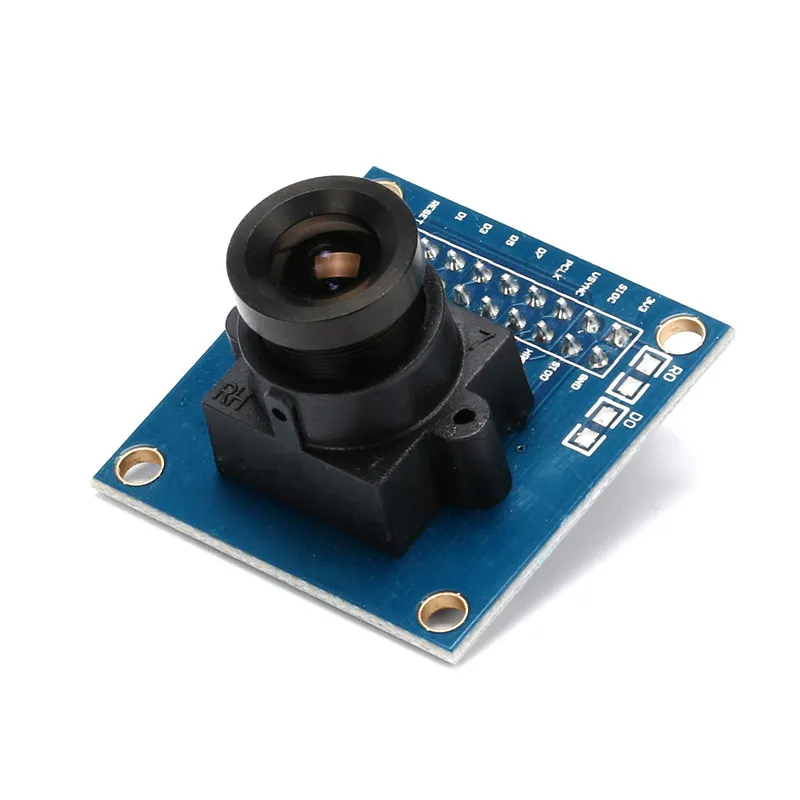
The OV7670 VGA Camera Module is a low-cost, small, and efficient camera module widely used in embedded systems, IoT projects, and basic computer vision applications. It is capable of capturing images and transmitting them to a microcontroller or processor for further processing.


GHS 80GHS 65

Description


Key Features

  • Image Sensor: CMOS sensor with VGA resolution (640 x 480 pixels)
  • Output Formats:
    • YUV (4:2:2), RGB565/555, and RAW Bayer data formats
  • Communication Interface: SCCB (Serial Camera Control Bus, similar to I2C)
  • Frame Rate: Up to 30 fps at VGA resolution
  • Lens: Fixed-focus lens
  • Power Supply: 3.3V
  • Low Power Consumption: Optimized for embedded applications
  • Adjustable Parameters: Brightness, contrast, saturation, and more via registers.

Specifications

  • Resolution: VGA (640x480), with support for lower resolutions like CIF (352x288) and QCIF (176x144).
  • Pixel Size: 3.6 µm x 3.6 µm
  • Maximum Frame Rate:
    • VGA: 30 fps
    • QVGA (320x240): 60 fps
  • Operating Voltage:
    • Analog: 2.5V–3.0V
    • Digital: 1.7V–3.0V
  • Communication Protocol: SCCB (supports register configuration)
  • Clock Input: Typically requires a 24 MHz external clock.

Pinout

  1. GND: Ground
  2. VCC: 3.3V Power
  3. SCL: SCCB Clock Line
  4. SDA: SCCB Data Line
  5. RESET: Reset (active low)
  6. PWDN: Power down (active high)
  7. VSYNC: Vertical sync
  8. HREF: Horizontal reference
  9. PCLK: Pixel clock
  10. D0–D7: Data pins (8-bit parallel output)

Applications

  • Image and video capture for IoT devices
  • Embedded vision systems
  • Educational projects
  • Object detection and tracking
  • Motion detection
  • Surveillance systems

Interfacing the OV7670

The module outputs an 8-bit parallel data signal synchronized by VSYNC, HREF, and PCLK. Interfacing it with microcontrollers like Arduino or STM32 involves the following:

  1. Hardware Setup:
    • Connect the SCCB pins (SCL, SDA) to the microcontroller's I2C lines.
    • Connect PCLK, VSYNC, HREF, and D0–D7 to GPIO pins.
  2. Software Libraries:
    • Use libraries or write custom drivers to configure the camera module and capture data.
    • Configure camera registers to set resolution, output format, and other parameters.
  3. Data Processing:
    • Use external memory (e.g., SD cards) for storage, or process the data for tasks like object detection or color filtering.