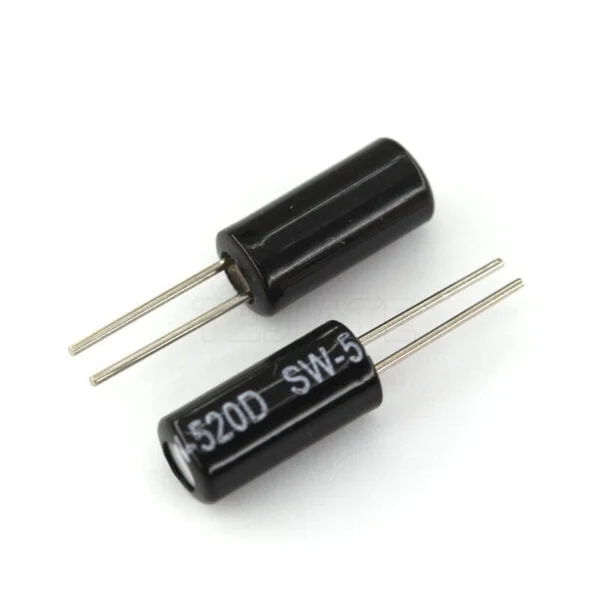
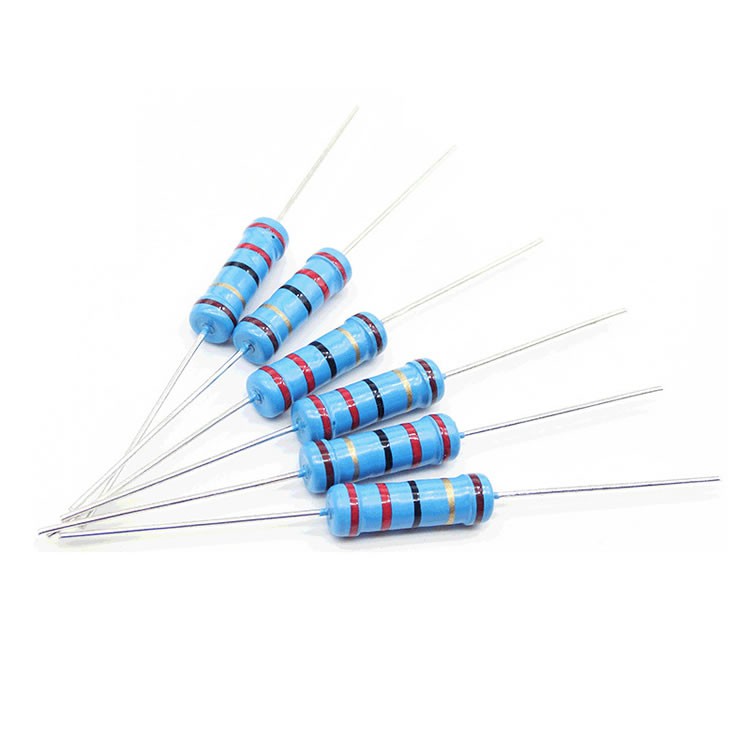
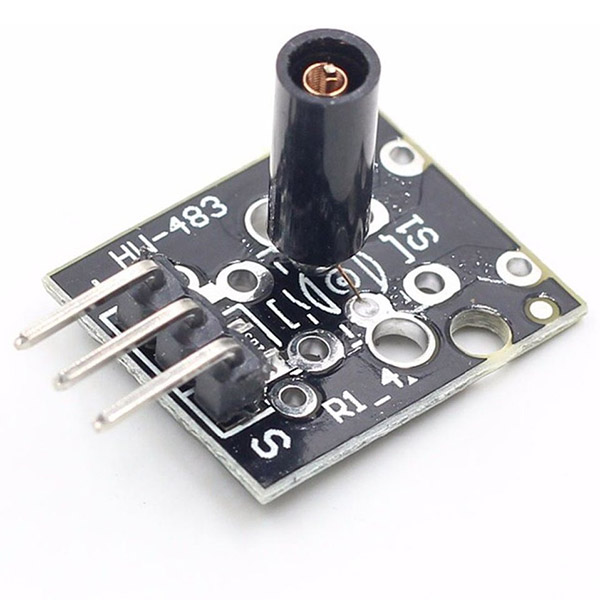
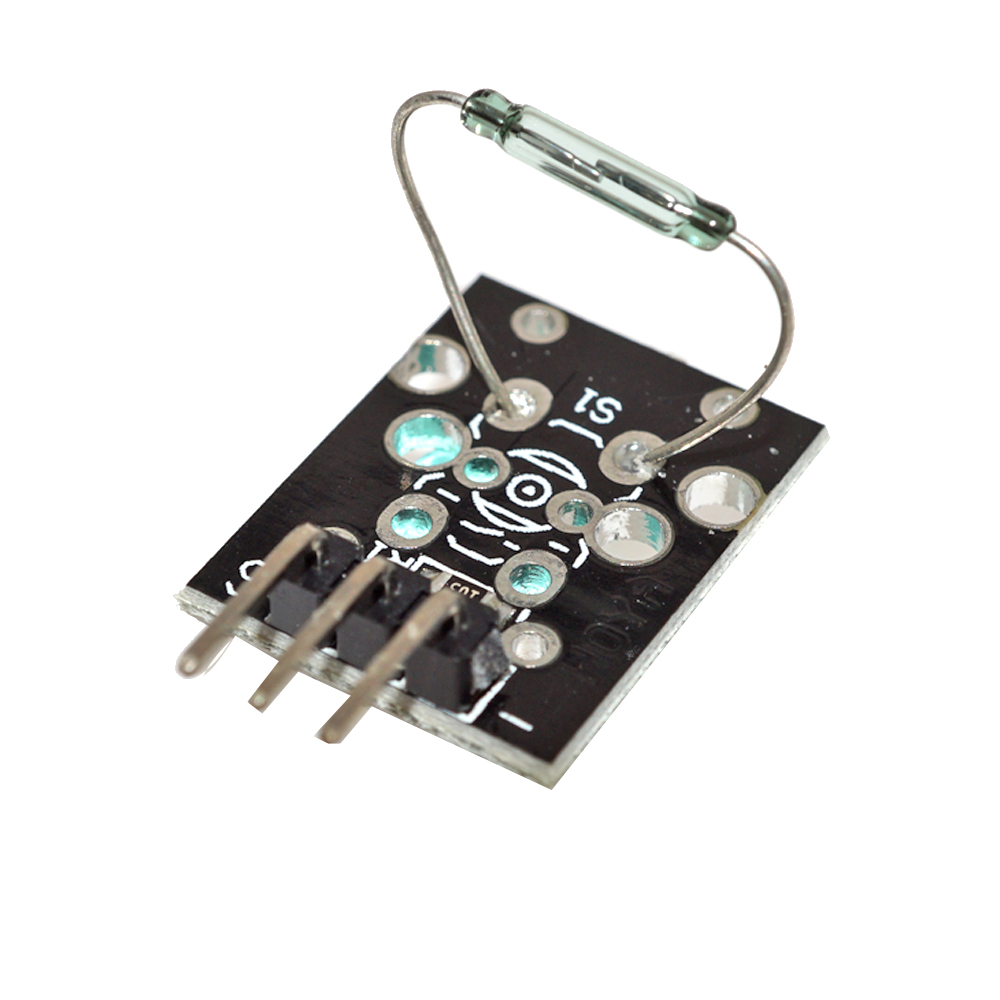
The SW-520D Roller-Ball Tilt Sensor (Standalone) is a compact, non-toxic mechanical tilt switch designed to detect changes in orientation, tilt, or vibration in electronic circuits. Housed in a sealed 5.2mm diameter x 13mm long metal cylinder, it contains two conductive metal balls that bridge internal contacts when the sensor is upright (within ±10° of vertical), closing the circuit (ON state, low resistance 200Ω). When tilted beyond ~10–45° or subjected to vibration/shock, the balls move apart, opening the circuit (OFF state, infinite resistance). Operating at 3–12V DC (20mA max current, 0.1mA in ON state), the sensor is polarity-insensitive and supports up to 10mA continuous load, making it suitable for low-power applications. With two 10mm axial leads, it’s easily soldered or inserted into breadboards, offering a lifespan of ~100,000 cycles at 1Hz. The SW-520D is ideal for Arduino projects, where it connects in a digital circuit with a 10kΩ pull-up resistor to VCC (e.g., 5V) and a digital input pin (e.g., D2) to read HIGH (no tilt) or LOW (tilt detected). Its fast response time (1–2ms) and 0.5kHz switching frequency suit applications like security alarms, anti-theft devices, robotics, or 3D printer tilt detection. Operating from -40°C to +80°C, it’s robust for indoor and protected outdoor use, though it lacks an IP rating and should be shielded from moisture. This RoHS-compliant sensor (weight ~0.5g) is perfect for cost-effective motion sensing, especially when paired with your earlier components like a 16x2 LCD to display tilt status or a NEMA 17 motor for tilt-activated motion. For stable Arduino readings, implement software debouncing (e.g., 10–50ms delay) to filter noise from ball movement, as rapid vibrations may cause intermittent signals. Note: For comparator-based modules with adjustable sensitivity, see the SW-520D Tilt Sensor Module.