Shop/Basic Electronics/3 pin LDR (Light-Dependent Resistor) Photosensitive Sensor Module
Sale3 pin LDR (Light-Dependent Resistor) Photosensitive Sensor Module
Basic Electronics43 in stock

3 pin LDR (Light-Dependent Resistor) Photosensitive Sensor Module

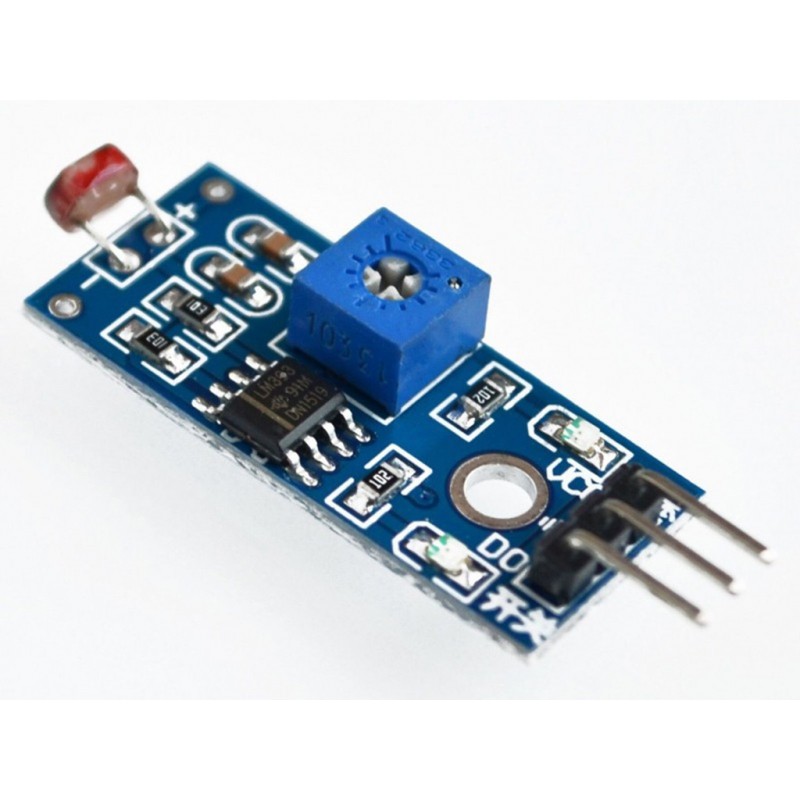
The 3-Pin LDR Photosensitive Sensor Module offers digital output for light detection, perfect for Arduino-based automation with adjustable sensitivity.
GHS 21GHS 12

Description

The 3-Pin LDR Photosensitive Sensor Module is a compact, light-sensitive device designed to detect ambient brightness and light intensity, featuring a light-dependent resistor (LDR) and a high-quality LM393 voltage comparator. Unlike its 4-pin counterpart with both analog and digital outputs, this 3-pin version provides only a digital output, making it ideal for simple on/off applications. Operating on a 3.3V to 5V DC supply, it consumes minimal power with a driving capability of 15mA. The module includes an adjustable potentiometer to fine-tune sensitivity to light levels, triggering a digital switch output (high or low) based on the detected light intensity. In low-light conditions, the output goes high (1), while in bright conditions, it goes low (0), enabling direct control of relays or other digital devices.

This module features a signal output indicator light for visual feedback and a mounting hole for easy installation in DIY projects. Its 3-pin configuration typically includes VCC, GND, and DO (digital output), simplifying wiring for Arduino or other microcontrollers. It is highly sensitive to environmental light changes, with resistance varying from high (e.g., 1MΩ in darkness) to low (e.g., a few ohms in bright light) depending on illumination. Perfect for applications like automatic lighting, security systems, or light-activated switches, it complements your NEO-7M GPS module for location-aware light monitoring or your DM542 driver for automated machinery. The module operates effectively from -10°C to +50°C and is compact, typically around 32x15x10mm.

Note: Calibration with the potentiometer is required to set the light threshold, and it should be used with a stable power supply to avoid false triggers.